Below are some details of language of film that I found.
Distance

As I found in most of websites, they would call VLS as Extreme Long Shot.
Long Shot (LS)
Medium Long Shot (MLS)
Medium Shot or Mid-Shot (MS)
Extreme Close-Up (ECU)

What
Where
It used when showing the main object at a considerable distance from the camera and thus presenting it in relation to general surroundings. Often these are landscape shots that give a view of a city, a town, or even a galaxy.
The wide shot helps identify both the character and his environment.
Long Shot (LS)
One of the primary functions of the long shot is to establish a context or sense of place.
Repeated use of long shots in a sequence tends to stress setting over character.
Medium Long Shot (MLS)
In the case of a standing actor, the lower frame line cuts off his feet and ankles. Some documentaries with social themes favour keeping people in the longer shots, keeping social circumstances rather than the individual as the focus of attention.
Medium Shot or Mid-Shot (MS)
In such a shot the subject or actor and its setting occupy roughly equal areas in the frame. In the case of the standing actor, the lower frame passes through the waist. The MS is a general, all-purpose shot and to see the body language or hand gesture. MS is frequently used for the tight presentation two actors or with dexterity three.
Medium Close Up (MCU)
Head and shoulders.
Close Up (CU)
A picture which shows a fairly small part of the scene, such as a character's face, in great detail so that it fills the screen. It abstracts the subject from a context. CU focuses attention on a person's feelings or reactions, and are sometimes used in interviews to show people in a state of emotional excitement, grief or joy.
Big Close Up (BCU)
It forehead to chin. BCUs are rarely used for important public figures.
Extreme Close-Up (ECU)
In the ECU, an entire panel or the screen is devoted to some detail important to the plot.
180 degree rule
If you are using multiple cameras and plan to edit the different shots in a scene into a seamless sequence, an important rule to keep in mind is to place all the cameras on the same side of a line of action. A line of action is a path which your subject is traveling along or an imaginary line between two characters who are interacting.
7 Items
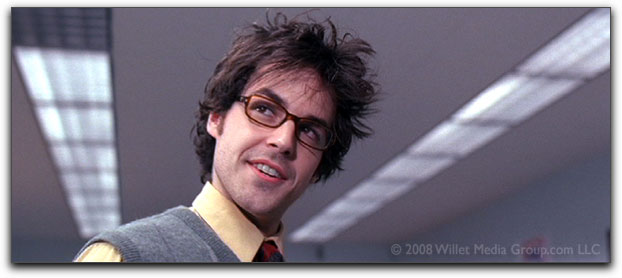
Who
In the film language, the who question is typically answered with the close-up (CU). The primary point of focus in any close-up is the subject's face. This framing typically mimics the experience of what you would see in real life if you were conversing with a person. A close-up is an intimate portrait of someone, more intimate than you would ever get with a stranger. This is part of why fans inherently feel as though they "know" famous actors. (Though the feeling is certainly not mutual!)
Who Is He?: A Close-up gives insight into who a character is.
These shots leave little doubt that one is a no-nonsense sourpuss and the other is a idealistic dreamer.
These shots leave little doubt that one is a no-nonsense sourpuss and the other is a idealistic dreamer.
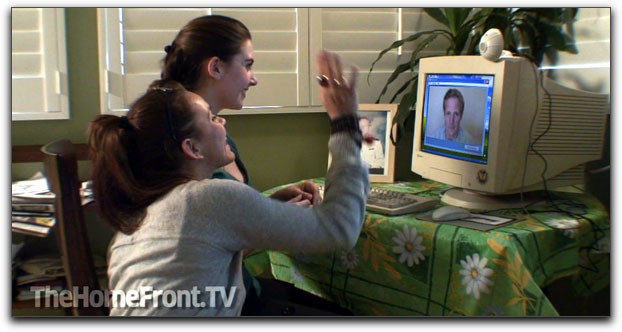
What
If you want to communicate what is going on, you probably need to show a subject performing an activity, and typically, this is conveyed in a medium shot (MS). To clarify, dramatic events are broken down into hundreds of discrete actions that can be described by active verbs (to lift, to threaten, to save, to give, to arrest, and so on.) While sometimes such actions might be subtle and internal enough to be conveyed in a CU, or complex enough to require a sequence of shots, very often the MS provides enough distance from the subject's eyes to move the focus off of their identity, but is still close enough to emphasize what it is they're doing.
What's Going On?: These Medium Shots are perfect for showing a variety of activities.
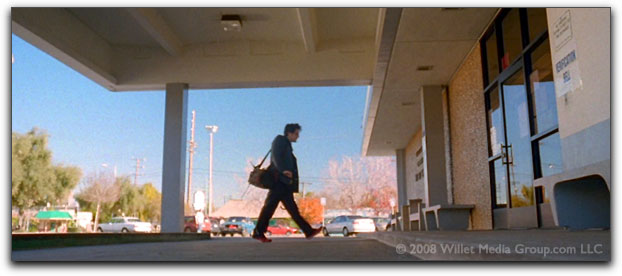
Where
The location of an event is critical. Sometimes this element is deliberately omitted for a while to emphasize suspense or disorientation, but if you go too long without answering this question, the audience will likely grow weary and eventually disengage from your story. The where question is nearly always answered with a Long Shot (LS) though depending on the nature of the scene, sometimes a medium long shot (MLS) or a shot even further away than an LS such as a wide shot (WS) might do the trick.
Where Are We?: Wider Shots clearly show a person in an environment.
When
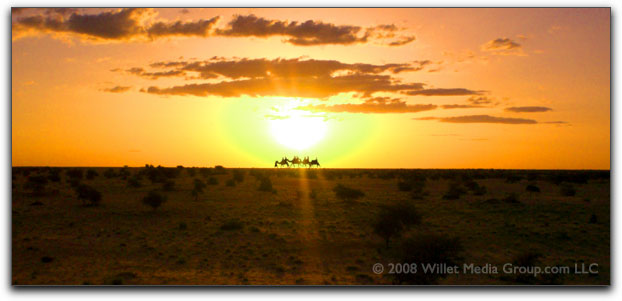
The when question can seem tricky, especially when trying to simplify it to a single shot type. When can mean what period in history, how long before or after an important story event, or it can mean at what point in the overall story arc. The quintessential when shot is the extreme-long shot (ELS or XLS), which illustrates the subject traversing such a vast space that there is a sense of how much time it will take. This could be a car traversing an endless stretch of highway, camels crossing the desert, or a ship in a huge swath of ocean.
The when question can seem tricky, especially when trying to simplify it to a single shot type. When can mean what period in history, how long before or after an important story event, or it can mean at what point in the overall story arc. The quintessential when shot is the extreme-long shot (ELS or XLS), which illustrates the subject traversing such a vast space that there is a sense of how much time it will take. This could be a car traversing an endless stretch of highway, camels crossing the desert, or a ship in a huge swath of ocean.
A Long Way To Go: The framing here emphasizes how tiny the camel caravan is compared to the huge desert they must traverse. Adding to the travelers' burden is the further information that the sun is setting and they're nowhere near any destination.
Why
This question points to the internal decision making of your subject, and when you want to delve into someone's thoughts, the classic shot to use is an extreme close-up (ECU or XCU or sometimes BCU for bigclose-up).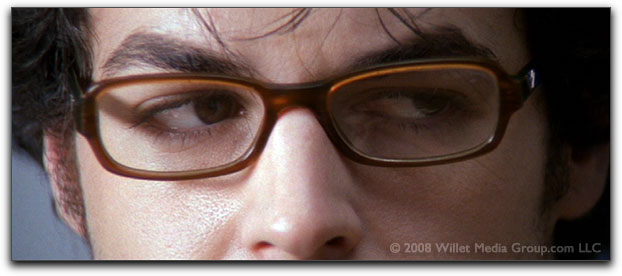
What's He Thinking?: ECUs like this one get the viewer wondering what the subject is thinking.
The decision making going on in there can serve as motivation for the action he takes next. How
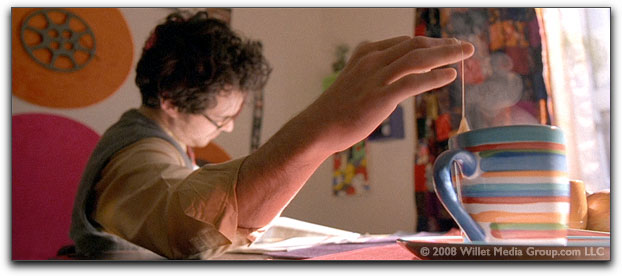
While the why is usually a very internal aspect of the story requiring suggestive shots and editing techniques, the how is just the opposite. This question is very external and is usually answered using either medium close-ups (MCU) of a subject performing a physical action (opening a door, lifting a manhole cover, packing a suitcase, etc.) or a series of CUs or ECUs of specific actions (pulling a trigger, snapping a latch closed, operating a piece of machinery, etc.)
A Very Particular Procedure: The MCU is a perfect shot to show just how meticulously the photographer likes his tea prepared. This particular example does double duty; since the teacup in the foreground is like a built-in Close-up of the action itself.
With Whom
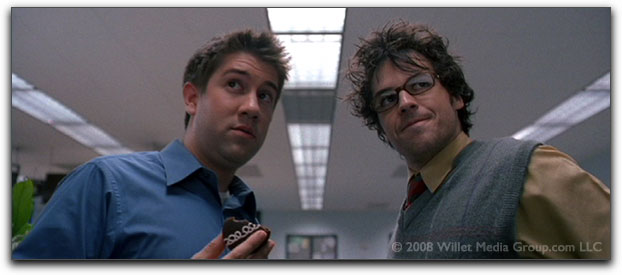
There's one more question that you must answer to satisfy your audience's unconscious need to make sense of the information you are communicating. Whenever you have a scenario with multiple subjects, their relative proximity, posture, and the power dynamic between them is an essential story element. With two people, this information is, by definition, contained in a 2-shot.
There's one more question that you must answer to satisfy your audience's unconscious need to make sense of the information you are communicating. Whenever you have a scenario with multiple subjects, their relative proximity, posture, and the power dynamic between them is an essential story element. With two people, this information is, by definition, contained in a 2-shot.
Best Buds: 2-shots can vary widely, from the standard over the shoulder (shown first) to a variety
of other arrangements that convey the subtle but critical relationship dynamics that are fundamental
to making sense of the story you are telling.
of other arrangements that convey the subtle but critical relationship dynamics that are fundamental
to making sense of the story you are telling.
Reference
Chandler, Daniel (1994): The Grammar of Television and Film. Aberystwyth University.
Dan Ablan: Types of Shots.
Michael Wohl: Language of Film


No comments:
Post a Comment