I missed week 4 tutorial due to I was sick.
And I cancelled all my shifts that week, didn't earn any money at all. :(
and below is the internet timeline and computing timeline things.
Here I just post some more recent computing history as its a long list.
And here is a website that content heaps of resource of computer history.
(http://www.computerhistory.org/timeline/)
Computing timeline
1998 - June 25 Microsoft released Windows '98. Some U.S. attorneys tried to block it's release since the new O/S interlaces with other programs such as M.S.I.E. and so effectively closes the market of such software to other companies. Microsoft has fought back with a letter to the White House suggesting that 26 of it's industry allies say that a delay in the release of the new O/S could damage the U.S. economy.
1999 - Jan 25 Linux Kernel 2.2.0 Released. The number of people running Linux is estimated at over 10million, making it an not only important operating system in the Unix world, but an increasingly important one in the PC world.
1999 - Feb 22 AMD release K6-III 400MHz version, 450 to OEMS. In some tests it outperforms soon-to-be released Intel P-III. It contains approximately 23 million transistors, and is based on 100Mhz super socket 7 motherboards, an improvement on the 66MHz buses their previous chips were based on. This helps it's performance when compared to Intel's Pentium II - which also uses a 100MHz bus speed.
1999 - Aug 31 Apple release the PowerMac G4. It's powered by the PowerPC G4 chip from Apple, Motorola and IBM. Available in 400MHz, 450MHz and 500MHz versions it's claimed to be the first personal computer to be capable of over one billion floating-point operations per second.
1999 - Nov 29 AMD release Athlon 750MHz version.
2000 - Jan 14 US Government announce restrictions on exporting Cryptography are relaxed. This allows US Companies to stop the long running, and rather ridiculous process of having to create US and International copies of their software.
2000 - Jan 19 Transmeta launch their new 'Crusoe' chips. Designed for laptops these prvoide comparible performance to the mid-range Pentium II chips, but consume a tiny fraction of the power. They are a new and exciting competitor to Intel in the x86 market.
2000 - Feb 17 Offical Launch of Windows 2000 - Microsoft's replacement for Windows 9x and Windows NT. Claimed to be faster and more reliable than previous versions of Windows the computing industry has mixed feelings about how much of a success it will really be.
Internet timeline
1969
ARPA (Advanced Research Projects Agency) goes online in December, connecting four major U.S. universities. Designed for research, education, and government organizations, it provides a communications network linking the country in the event that a military attack destroys conventional communications systems.
1972
Electronic mail is introduced by Ray Tomlinson, a Cambridge, Mass., computer scientist. He uses the @ to distinguish between the sender's name and network name in the email address.
1973
Transmission Control Protocol/Internet Protocol (TCP/IP) is designed and in 1983 it becomes the standard for communicating between computers over the Internet. One of these protocols, FTP (File Transfer Protocol), allows users to log onto a remote computer, list the files on that computer, and download files from that computer.
1976
Presidential candidate Jimmy Carter and running mate Walter Mondale use email to plan campaign events.
Queen Elizabeth sends her first email. She's the first state leader to do so.
1982
The word “Internet” is used for the first time.
1984
Domain Name System (DNS) is established, with network addresses identified by extensions such as .com, .org, and .edu.
Writer William Gibson coins the term “cyberspace.”
1985
Quantum Computer Services, which later changes its name to America Online, debuts. It offers email, electronic bulletin boards, news, and other information.
1988
A virus called the Internet Worm temporarily shuts down about 10% of the world's Internet servers.
1989
The World (world.std.com) debuts as the first provider of dial-up Internet access for consumers.
Tim Berners-Lee of CERN (European Laboratory for Particle Physics) develops a new technique for distributing information on the Internet. He calls it the World Wide Web. The Web is based on hypertext, which permits the user to connect from one document to another at different sites on the Internet via hyperlinks (specially programmed words, phrases, buttons, or graphics). Unlike other Internet protocols, such as FTP and email, the Web is accessible through a graphical user interface.
1990
The first effort to index the Internet is created by Peter Deutsch at McGill University in Montreal, who devises Archie, an archive of FTP sites.
1991
Gopher, which provides point-and-click navigation, is created at the University of Minnesota and named after the school mascot. Gopher becomes the most popular interface for several years.
Another indexing system, WAIS (Wide Area Information Server), is developed by Brewster Kahle of Thinking Machines Corp.
1993
Mosaic is developed by Marc Andreeson at the National Center for Supercomputing Applications (NCSA). It becomes the dominant navigating system for the World Wide Web, which at this time accounts for merely 1% of all Internet traffic.
1994
The White House launches its website, www.whitehouse.gov.
Initial commerce sites are established and mass marketing campaigns are launched via email, introducing the term “spamming” to the Internet vocabulary.
Marc Andreessen and Jim Clark start Netscape Communications. They introduce the Navigator browser.
1995
CompuServe, America Online, and Prodigy start providing dial-up Internet access.
Sun Microsystems releases the Internet programming language called Java.
The Vatican launches its own website, www.vatican.va.
1996
Approximately 45 million people are using the Internet, with roughly 30 million of those in North America (United States and Canada), 9 million in Europe, and 6 million in Asia/Pacific (Australia, Japan, etc.). 43.2 million (44%) U.S. households own a personal computer, and 14 million of them are online.
1997
On July 8, 1997, Internet traffic records are broken as the NASA website broadcasts images taken by Pathfinder on Mars. The broadcast generates 46 million hits in one day.
The term “weblog” is coined. It’s later shortened to “blog.”
1998
Google opens its first office, in California.
1999
College student Shawn Fanning invents Napster, a computer application that allows users to swap music over the Internet.
The number of Internet users worldwide reaches 150 million by the beginning of 1999. More than 50% are from the United States.
“E-commerce” becomes the new buzzword as Internet shopping rapidly spreads.
MySpace.com is launched.
2000
To the chagrin of the Internet population, deviant computer programmers begin designing and circulating viruses with greater frequency. “Love Bug” and “Stages” are two examples of self-replicating viruses that send themselves to people listed in a computer user's email address book. The heavy volume of email messages being sent and received forces many infected companies to temporarily shut down their clogged networks.
The Internet bubble bursts, as the fountain of investment capital dries up and the Nasdaq stock index plunges, causing the initial public offering (IPO) window to slam shut and many dotcoms to close their doors.
America Online buys Time Warner for $16 billion. It’s the biggest merger of all time.
2001
Napster is dealt a potentially fatal blow when the 9th U.S. Circuit Court of Appeals in San Francisco rules that the company is violating copyright laws and orders it to stop distributing copyrighted music. The file-swapping company says it is developing a subscription-based service.
About 9.8 billion electronic messages are sent daily.
Wikipedia is created.
2002
As of January, 58.5% of the U.S. population (164.14 million people) uses the Internet. Worldwide there are 544.2 million users.
The death knell tolls for Napster after a bankruptcy judge ruled in September that German media giant Bertelsmann cannot buy the assets of troubled Napster Inc. The ruling prompts Konrad Hilbers, Napster CEO, to resign and lay off his staff.
2003
It's estimated that Internet users illegally download about 2.6 billion music files each month.
Spam, unsolicited email, becomes a server-clogging menace. It accounts for about half of all emails. In December, President Bush signs the Controlling the Assault of Non-Solicited Pornography and Marketing Act of 2003 (CAN-SPAM Act), which is intended to help individuals and businesses control the amount of unsolicited email they receive.
Apple Computer introduces Apple iTunes Music Store, which allows people to download songs for 99 cents each.
Spam, unsolicited email, becomes a server-clogging menace. It accounts for about half of all emails.
Apple Computer introduces Apple iTunes Music Store, which allows people to download songs for 99 cents each.
2004
Internet Worm, called MyDoom or Novarg, spreads through Internet servers. About 1 in 12 email messages are infected.
Online spending reaches a record high—$117 billion in 2004, a 26% increase over 2003.
2005
YouTube.com is launched.
2006
There are more than 92 million websites online.
2007
Legal online music downloads triple to 6.7 million downloads per week.
Colorado Rockies' computer system crashes when it receives 8.5 million hits within the first 90 minutes of World Series ticket sales.
The online game, World of Warcraft, hits a milestone when it surpasses 9 million subscribers worldwide in July.
2008
In a move to challenge Google's dominance of search and advertising on the Internet, software giant Microsoft offers to buy Yahoo for $44.6 billion.
In a San Fransisco federal district court, Judge Jeffrey S. White orders the disabling of Wikileaks.org, a Web site that discloses confidential information. The case was brought by Julius Baer Bank and Trust, located in the Cayman Islands, after a disgruntled ex-employee allegedly provided Wikileaks with stolen documents that implicate the bank in asset hiding, money laundering, and tax evasion. Many web communities, who see the ruling as unconstitutional, publicized alternate addresses for the site and distributed bank documents through their own networks. In response, Judge White issues another order to stop the distribution of bank documents.
Microsoft is fined $1.3 billion by the European Commission for further abusing its dominant market position, and failing to comply to their 2004 judgment, which ordered Microsoft to give competitors information necessary to operate with Windows. Since 2004, Microsoft has been fined a total of $2.5 billion by the Commission for not adhering to their ruling.
Sources for this timeline include International Data Corporation, the W3C Consortium, Nielsen/NetRatings, and the Internet Society.
reference
http://www.factmonster.com/ipka/A0193167.html
http://www.teachers.ash.org.au/dbrown/8162/timeline.htm
Sunday, August 23, 2009

Scavenger Hunt For Thursday
Alright, this week task is to answer the questions below without using wikipedia and google.
But I can tell you that I don't really use wikipedia or google for my search before because my favorite one is Yahoo! ha.. I know in someway google is much better especially when we need to search some literature reviews or theories to do our assessment. However if you know there is a function (should I call it function?) called Knowledge+ which is named Yahoo answer in AU YAHOO!7. Its very popular in Taiwan and you always find something useful, amazing, interesting or even stupid questions (as I think the oz Yahoo answer is not that popular or fun).
Anyway, lets start to answer these questions.
1. What is the height of the world's biggest tree? How long did it take to grow?
General Sherman is the biggest giant sequoia and the biggest tree in the world. He is 83.8 m (274.9 feet) tall, his girth at breast height is 24,10 m (79 feet) (near the ground it is 31,3 m or 102,6 feet). The width of the crown is 33 m, and the first branch starts only at 40 m or 130 feet! For a long time it was thought that this tree had reached an age of 2000 to 3000 years. Others even spoke about ages of 6000 to 11000 years. Research out of 2002 has shown that he is probably 'only' about 2000 years old.
By the way, the tallest tree in the world is a coast redwood (Sequoia sempervirens), named Hyperion after a person in Greek mythology. He is no less than 115.55 m (379.1 feet) tall!
2. What is the best way (quickest, most reliable) to contact Madonna?
sources
http://users.telenet.be/sequoiadendron/en/california.html
http://www.superiorpics.com/madonna/contact.html
http://www.find-health-articles.com/msh-glycomics.htm
http://www.wordspy.com/words/seagullmanager.asp http://www.imdb.com/title/tt0113243/
http://www.themovieblog.com/2008/06/movie-blog-history-lesson-555
http://www.flightcentre.com.au/
http://www.bobborst.com/popculture/number-one-songs-by-year/?y=1970
http://live-wirez.gu.edu.au/Staff/Stephen/default.html
But I can tell you that I don't really use wikipedia or google for my search before because my favorite one is Yahoo! ha.. I know in someway google is much better especially when we need to search some literature reviews or theories to do our assessment. However if you know there is a function (should I call it function?) called Knowledge+ which is named Yahoo answer in AU YAHOO!7. Its very popular in Taiwan and you always find something useful, amazing, interesting or even stupid questions (as I think the oz Yahoo answer is not that popular or fun).
Anyway, lets start to answer these questions.
1. What is the height of the world's biggest tree? How long did it take to grow?
General Sherman is the biggest giant sequoia and the biggest tree in the world. He is 83.8 m (274.9 feet) tall, his girth at breast height is 24,10 m (79 feet) (near the ground it is 31,3 m or 102,6 feet). The width of the crown is 33 m, and the first branch starts only at 40 m or 130 feet! For a long time it was thought that this tree had reached an age of 2000 to 3000 years. Others even spoke about ages of 6000 to 11000 years. Research out of 2002 has shown that he is probably 'only' about 2000 years old.
By the way, the tallest tree in the world is a coast redwood (Sequoia sempervirens), named Hyperion after a person in Greek mythology. He is no less than 115.55 m (379.1 feet) tall!
2. What is the best way (quickest, most reliable) to contact Madonna?
Creative Artists Agency
9830 Wilshire Boulevard
Beverly Hills, California
90212-1825
USA
3. What is the age of the oldest ever captive elephant? Is this older than the average wild age?
The oldest captive elephant was 86 years old, and was grown in Taiwan (so I should already know this, shouldn't I?) and yes, it is older than the average wild age as average wild age is about 60 years.
4.a) How would you define the word 'glycomics'? In your own words, what does it really mean ? b)What does the term 'seagull manager' refer to?
a)Glycomics? I know the word "comic" but glycomics? Sorry! I really need a dictionary to help to define.
The systematic study of the structure and function of the complete set of glycans (the glycome) produced in a single organism and identification of all the genes that encode glycoproteins.
Common names: Glycomics; Glycomic; Glycobiology
(my friend told me "glyco-" is something about glucose, and he was right! He is only 18 years old. Thats pretty smart. Haha)
b)A manager who only interacts with employees to criticize their work or when a problem arises.
5. What was David Cronenberg's most recent feature film? Which of his films Had 'Blondie' in it?
David Cronenberg latest film which he directed is 'Eastern Promises'. The Blondie was in the movie called Videodrome.
6. When was the original 'Hackers' released?
Hackers starring Angelina Jolie and Jonny Lee Miller was released in 1995.
7. Why do phone numbers in Hollywood films start with '555'?
Numbers 555-0100 through 555-0199 are now specifically reserved for fictional use, because it is not a real area code.
8. What is the cheapest form of travel from the Gold Coast to Cairns?
Jetstar does flights from $79 (one way) from Cairns to Gold Coast or Gold Coast to Cairns
9. What song was top of the Australian Pop Charts this week in 1970?
The top pop song on Australian Charts in mid August (16 – 22) was Bread - Make It With You.
10. Which Brisbane band includes Stephen Stockwell on keyboards and vocals?
sources
http://users.telenet.be/sequoiadendron/en/california.html
http://www.superiorpics.com/madonna/contact.html
http://www.find-health-articles.com/msh-glycomics.htm
http://www.wordspy.com/words/seagullmanager.asp http://www.imdb.com/title/tt0113243/
http://www.themovieblog.com/2008/06/movie-blog-history-lesson-555
http://www.flightcentre.com.au/
http://www.bobborst.com/popculture/number-one-songs-by-year/?y=1970
http://live-wirez.gu.edu.au/Staff/Stephen/default.html


Chanel No5 Film
The Start of new Chanel No5 Film (just 2 seconds)
I dont know why that it always appear error when I upload the full film so if you want to watch the full version, please check on youtube or the chanel no5 website.
Its by one of my favorite actresses- Audrey Tautou
Backgroud music- Billie Holliday "I'm a fool to want you"
Reference
http://www.chaneln5.com/
Wednesday, August 12, 2009
Language of Film/Screen
Below are some details of language of film that I found.
Distance

As I found in most of websites, they would call VLS as Extreme Long Shot.
Long Shot (LS)
Medium Long Shot (MLS)
Medium Shot or Mid-Shot (MS)
Extreme Close-Up (ECU)

What
Where
It used when showing the main object at a considerable distance from the camera and thus presenting it in relation to general surroundings. Often these are landscape shots that give a view of a city, a town, or even a galaxy.
The wide shot helps identify both the character and his environment.
Long Shot (LS)
One of the primary functions of the long shot is to establish a context or sense of place.
Repeated use of long shots in a sequence tends to stress setting over character.
Medium Long Shot (MLS)
In the case of a standing actor, the lower frame line cuts off his feet and ankles. Some documentaries with social themes favour keeping people in the longer shots, keeping social circumstances rather than the individual as the focus of attention.
Medium Shot or Mid-Shot (MS)
In such a shot the subject or actor and its setting occupy roughly equal areas in the frame. In the case of the standing actor, the lower frame passes through the waist. The MS is a general, all-purpose shot and to see the body language or hand gesture. MS is frequently used for the tight presentation two actors or with dexterity three.
Medium Close Up (MCU)
Head and shoulders.
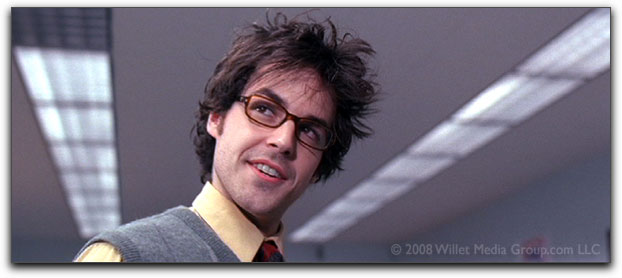
Close Up (CU)
A picture which shows a fairly small part of the scene, such as a character's face, in great detail so that it fills the screen. It abstracts the subject from a context. CU focuses attention on a person's feelings or reactions, and are sometimes used in interviews to show people in a state of emotional excitement, grief or joy.
Big Close Up (BCU)
It forehead to chin. BCUs are rarely used for important public figures.
Extreme Close-Up (ECU)
In the ECU, an entire panel or the screen is devoted to some detail important to the plot.
180 degree rule
If you are using multiple cameras and plan to edit the different shots in a scene into a seamless sequence, an important rule to keep in mind is to place all the cameras on the same side of a line of action. A line of action is a path which your subject is traveling along or an imaginary line between two characters who are interacting.
7 Items
Who
In the film language, the who question is typically answered with the close-up (CU). The primary point of focus in any close-up is the subject's face. This framing typically mimics the experience of what you would see in real life if you were conversing with a person. A close-up is an intimate portrait of someone, more intimate than you would ever get with a stranger. This is part of why fans inherently feel as though they "know" famous actors. (Though the feeling is certainly not mutual!)
Who Is He?: A Close-up gives insight into who a character is.
These shots leave little doubt that one is a no-nonsense sourpuss and the other is a idealistic dreamer.
These shots leave little doubt that one is a no-nonsense sourpuss and the other is a idealistic dreamer.
What
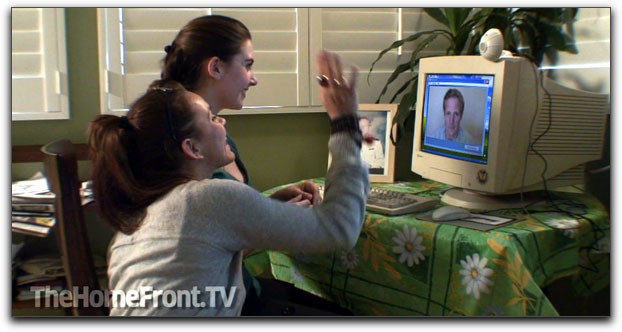
If you want to communicate what is going on, you probably need to show a subject performing an activity, and typically, this is conveyed in a medium shot (MS). To clarify, dramatic events are broken down into hundreds of discrete actions that can be described by active verbs (to lift, to threaten, to save, to give, to arrest, and so on.) While sometimes such actions might be subtle and internal enough to be conveyed in a CU, or complex enough to require a sequence of shots, very often the MS provides enough distance from the subject's eyes to move the focus off of their identity, but is still close enough to emphasize what it is they're doing.
What's Going On?: These Medium Shots are perfect for showing a variety of activities.
Where
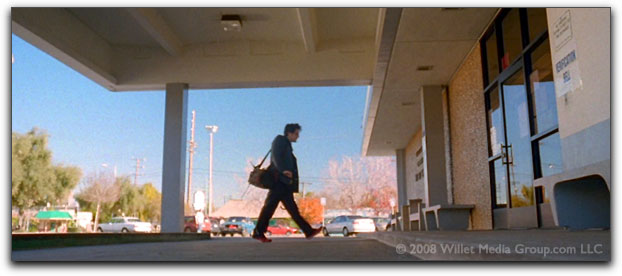
The location of an event is critical. Sometimes this element is deliberately omitted for a while to emphasize suspense or disorientation, but if you go too long without answering this question, the audience will likely grow weary and eventually disengage from your story. The where question is nearly always answered with a Long Shot (LS) though depending on the nature of the scene, sometimes a medium long shot (MLS) or a shot even further away than an LS such as a wide shot (WS) might do the trick.
Where Are We?: Wider Shots clearly show a person in an environment.
When
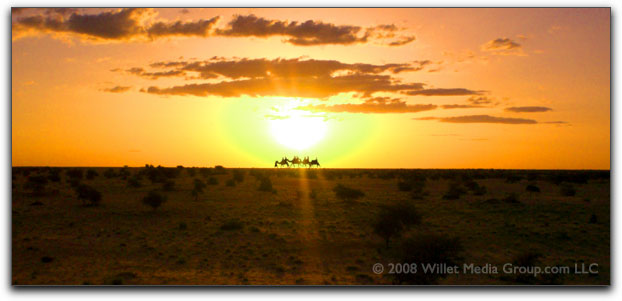
The when question can seem tricky, especially when trying to simplify it to a single shot type. When can mean what period in history, how long before or after an important story event, or it can mean at what point in the overall story arc. The quintessential when shot is the extreme-long shot (ELS or XLS), which illustrates the subject traversing such a vast space that there is a sense of how much time it will take. This could be a car traversing an endless stretch of highway, camels crossing the desert, or a ship in a huge swath of ocean.
The when question can seem tricky, especially when trying to simplify it to a single shot type. When can mean what period in history, how long before or after an important story event, or it can mean at what point in the overall story arc. The quintessential when shot is the extreme-long shot (ELS or XLS), which illustrates the subject traversing such a vast space that there is a sense of how much time it will take. This could be a car traversing an endless stretch of highway, camels crossing the desert, or a ship in a huge swath of ocean.
A Long Way To Go: The framing here emphasizes how tiny the camel caravan is compared to the huge desert they must traverse. Adding to the travelers' burden is the further information that the sun is setting and they're nowhere near any destination.
Why
This question points to the internal decision making of your subject, and when you want to delve into someone's thoughts, the classic shot to use is an extreme close-up (ECU or XCU or sometimes BCU for bigclose-up).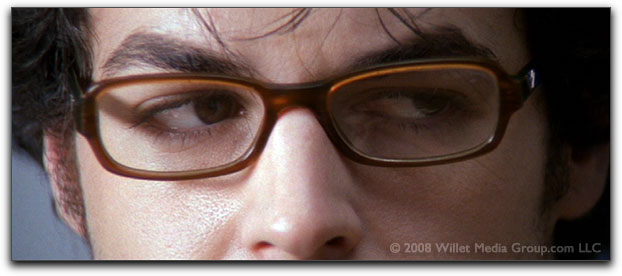
What's He Thinking?: ECUs like this one get the viewer wondering what the subject is thinking.
The decision making going on in there can serve as motivation for the action he takes next. How
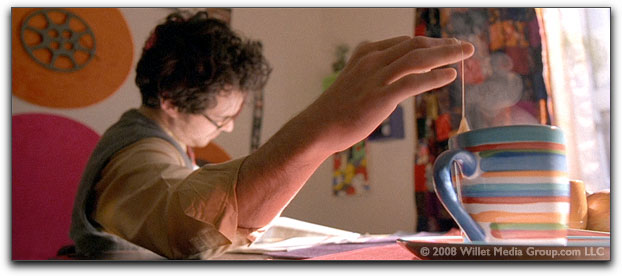
While the why is usually a very internal aspect of the story requiring suggestive shots and editing techniques, the how is just the opposite. This question is very external and is usually answered using either medium close-ups (MCU) of a subject performing a physical action (opening a door, lifting a manhole cover, packing a suitcase, etc.) or a series of CUs or ECUs of specific actions (pulling a trigger, snapping a latch closed, operating a piece of machinery, etc.)
A Very Particular Procedure: The MCU is a perfect shot to show just how meticulously the photographer likes his tea prepared. This particular example does double duty; since the teacup in the foreground is like a built-in Close-up of the action itself.
With Whom
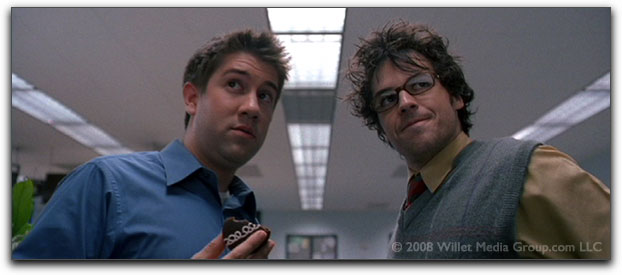
There's one more question that you must answer to satisfy your audience's unconscious need to make sense of the information you are communicating. Whenever you have a scenario with multiple subjects, their relative proximity, posture, and the power dynamic between them is an essential story element. With two people, this information is, by definition, contained in a 2-shot.
There's one more question that you must answer to satisfy your audience's unconscious need to make sense of the information you are communicating. Whenever you have a scenario with multiple subjects, their relative proximity, posture, and the power dynamic between them is an essential story element. With two people, this information is, by definition, contained in a 2-shot.
Best Buds: 2-shots can vary widely, from the standard over the shoulder (shown first) to a variety
of other arrangements that convey the subtle but critical relationship dynamics that are fundamental
to making sense of the story you are telling.
of other arrangements that convey the subtle but critical relationship dynamics that are fundamental
to making sense of the story you are telling.
Reference
Chandler, Daniel (1994): The Grammar of Television and Film. Aberystwyth University.
Dan Ablan: Types of Shots.
Michael Wohl: Language of Film
mistake
I have to say that I'm soooooo stupid.
On tuesday, I had Tourism Economic class which started at 12. and I would say that its one of the most important tut classes this semester because we're going to submit the group member list and sort. I was not too worried about that because last week I already found a group to join in. However, I made the most stupid mistake that I didnt check my alarm before I went to bed and I woke up too late to attend the tut class. After all, I don't have a group now and I have to wait they put up the group list, then find someone who hasn't got a group yet and group a group. The worst thing is that we may in different tut classes and I or he/she has to change the timetable. And thats really bad!!!!! I love my timetable for economic class, 12pm tut and 2pm lec. such a wonderful timetable and now things may be changed. Alright! I know that I should be positive and I'll TRY!
Bless me about this everything. Pray for me. :_(
Friday, August 7, 2009
Stop motion videos
The Pen Story/ PenStory
Her Morning Elegance/ Oren Lavie
There is another amazing one called Stop Motion with Wolf and Pig. Directed by Takeuchi Taijin.
Enjoy!
Thursday, August 6, 2009
The Postal Service "Give Up" Album
Two of favorite songs from The Postal Service.
Obviously they're not the official music videos.
Sleep In is my favorite one.
Such Great Heights is one of their most popular songs. (and the only one that has official MV, maybe)
Click The Postal Service to browse their offical website.
Convergence Tech
Wikipedia defines that Technological convergence is the tendency for different technology systems to evolve towards performing similar tasks. (yes, wikipedia and google are not everything, but sometimes they are quite helpful.) or
Check NCT09-GC for a better, detailed defination. ;)
Check NCT09-GC for a better, detailed defination. ;)

HTC touch pro. One of my favorite phone so far.
It includes camera, video, internet, games, and lots more. And you can always update the version from the official website.
Yes, I've hear HTC' system is not as smart as Blackberry.
It's touch screen is not as sensitive as I Phone (non of other brands are). But I like the keyboard desing as I'm not a totally touch screen person. I still prefer keyboard which is easier for typing. The Touch Pro 2 has been published as well, with more functions and improved system. However I don't really like the design, is too smooth (as other brands). I have to say its I Phone's effective (OH NO!). More fake iPhones are coming soon.
Click HTC to see more about HTC Smart Phones.

Skype incorporates features of a phone using both internet and computer. Now can even just use phones/mobiles to connect skype and make calls easily and cheap.
Click Skype for more info and download.

Wii (Black version)
Wii can be said its one of the convergence technology as well. Its not only a game console, but also an internet browser and social networking tool.

Computers are very good examples. They are now more powerful than used to be. They are now including camera, can be game console, DVD player and much more.
Click Apple to see more Apple products.
Wednesday, August 5, 2009
first tutorial
Its the second week of uni starts but my first time to attend the tutorial class... Yep! I missed last tutorial. I was sooooo late! as I live in South Bank (which is in Brisbane city). Travel from zone 1 to zone 12 almost everyday. Thats wasting time? Not really! I always have an hr rest in the train, although its not too comfortable.
Few people just like me, have to ask what others did last week and try to catch up.
Well... actually just setting up a blog. ;)
Will try to figure out what need to be done.
By the way, just noticed that Im the only Asian in this tutorial class, wow! (or just others did not come today?)
work again later. you'll see me like a zomby.
I need more time to sleep.
Subscribe to:
Posts (Atom)
